The Mid-Autumn Festival is one that is celebrated, much like Chinese New year, in Chinese/Asian communities all over the world. This festival is one of China’s most recognized holidays and has been celebrated for over 3,000 years. The festival became a formal celebration during the Tang Dynasty between 618-907AD (Mid-Autumn Festival 2021). Explaining the creation of this celebration is the myth of Chang’e, who is now referred to as the Chinese moon goddess. Chang’e and the story of her love Hou Yi plays an important role in the significance and meaning of the holiday for the Chinese community.
As the second part of my investigation into Chinese myths and how their significance is communicated to younger generations this essay will look at the story of Chang’e through an animation done by ‘Overly Sarcastic Productions’. This animation has over 1.5 million views on youtube and does a great job of presenting the myth through a fun and digestible medium. This essay in addition to commenting on the use of animation to tell the story of Chang’e will try to deconstruct how visual techniques and the like have been used to convey the importance of the Mid-Autumn festival and its meaning to viewers.
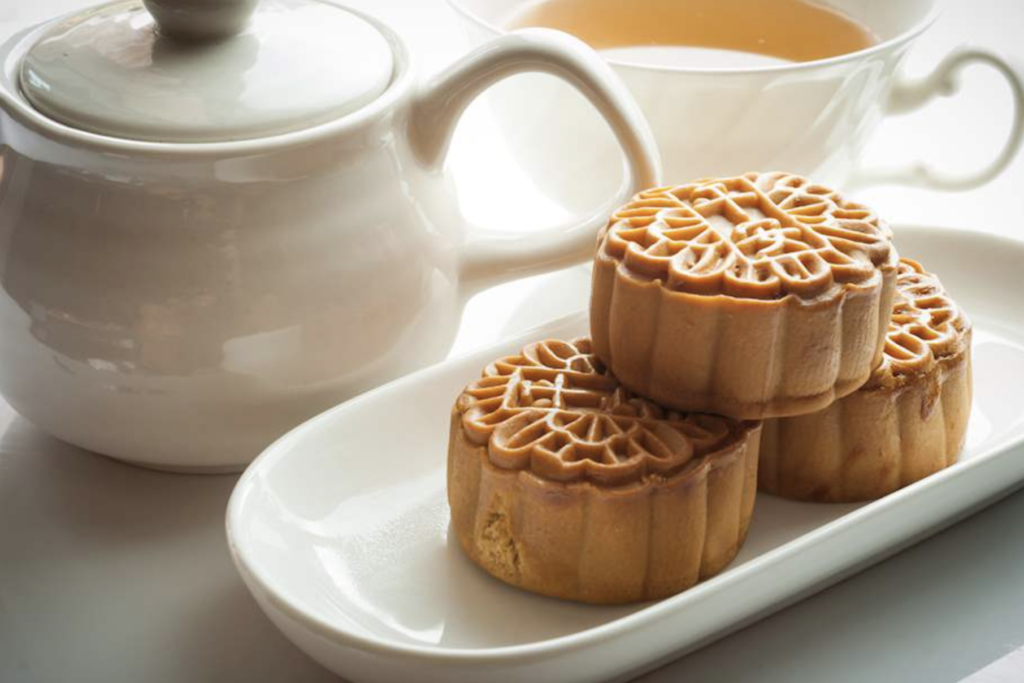
The Mid-Autumn festival is celebrated each year on the 15th day of the eight month. This is the day that the Chinese people believe that this is the day that the moon is at its brightest and fullest (Mid-autumn facts). In addition to the moon’s beauty, the festival also coincides with the traditional mid-autumn harvest. To the Chinese people the festival celebrates two fundamental concepts; the first of which is the importance of family. The significance of family during this time is also said to be symbolized by the roundness and brightness of the moon which represents family reunion to the Chinese people (Mid-Autumn Festival: An important moment for Chinese families).This reference to family is similarly embodied by one of the celebratory foods that is made and eaten during this holiday. This food is the moon cake, which traditionally are split evenly between each member of the family. (Mid-Autumn Festival: An important moment for Chinese families). The next of these central concepts to the Mid-Autumn Moon festival is the giving of thanks for the harvest, or for harmonious unions. This giving of thanks for harmonious unions was added to as the holiday acted as a second valentine’s day in China in the past (Mid-autumn facts). The significance of these two concepts, derived from the myth of Chang’e, help to bolster the importance of the holiday for Chinese people around the world as whole communities come together to admire the moon and celebrate their good fortune and family.
One of the most interesting aspects of the Chang’e myth is the several different variations that exist of the story. And although it is very common for myths that predate written record and that were passed on through word of mouth to have these variations, the two most popular versions of this myth totally change this story and the way that Chang’e is perceived as the moon goddess.
To explain these variations I first have to give a little context about the myth. The story goes that Chang’e and her husband, Hou Yi, were both immortals and lived in the heavens. Hou Yi was known as ‘the divine archer’ and one day the Jade emperor came to him and asked him to shoot his sons, who had transformed themselves into literal suns and were burning the earth, out of the sky. Hou Yi did this and after completing the task that was asked of him was banished to Earth and stripped of his divinity along with his wife Chang’e. The two, now living on Earth, disliked the fact that they were mortals and had to experience the harshness of life. Hou Yi then on Earth goes on a quest to find the ‘Mother of the West’ who is said to have the elixir of immortality (To learn more about the Mother of the West, check out my peer Chloe’s website – https://cselover.bergbuilds.domains/traditionalchina/hst269/project-1-print-of-the-queen-mother-of-the-west-or-xiwangmu/). When he finds the ‘Mother of the West’ she is sympathetic and gives him the elixir. Hou Yi then makes his way back to Chang’e.
At this point the myth splits into its different variations. In the first version the ‘Mother of the West’ only gives Hou Yi enough to make one person immortal. Once Hou Yi explains this to Chang’e they both agree that they would rather live mortal lives together than one of them return to being a god while the other lives on Earth. After reaching this decision Hou Yi and Chang’e lock the elixir away for a number of years until one day Feng Meng, an apprentice of Hou Yi’s, learns about the elixir and breaks into the house while Hou Yi is out hunting. Chang’e is then attacked by Feng Meng and realizes that there are only two possible outcomes that are going to come from this situation. The first is that she will die and let Feng Meng become immortal and the second, which she ends up choosing to do, is that she must drink the elixir herself and become immortal. Once she becomes a god again she decides to live on the moon to be as close as she can to Hou Yi, who then lives out his mortal life on Earth.
In the other version of the myth Hou Yi returns with enough elixir to make two people immortal or to restore one person’s divinity. Chang’e after hearing what the ‘Mother of the West’ had told to Hou Yi and isn’t satisfied with the idea of just becoming immortal again and wanted to restore her divinity and to return to heaven. She then stole the elixir and drank it all herself. After doing this she returned to heaven where she was met by the Jade emperor, who made it clear to her that although she had recovered her divinity she was, like her husband, still banished from heaven. Hearing this and now not being welcomed on either heaven or Earth Chang’e went to live on the moon by herself.
Now recognizing how different these two variations make the myth of Chang’e it is interesting to think about how this second version of the myth has survived for so long when looking at the celebration of the mid-autumn festival today and the significance of family in such celebrations.
As we look to how the importance of this story is communicated to younger audiences we will use the case study of Overly Sarcastic Productions ‘Miscellaneous myths: Hou Yi and Chang’e’. This production takes the form of an animation that presents both variations of the Chang’e myth. In the animation we see how Overly Sarcastic Productions uses different visual techniques to present the various significant elements of the story. In addition to these techniques being used to present the importance of the story they also illustrate the difference between the two variations of the myth very well.
The first of the techniques that we see Overly Sarcastic productions use is color as it aids in telling the story of the animation. This is done very effectively on several occasions throughout the video. For younger audiences this use of color helps to simplify certain, more complex aspects of the story. An example of this is Chang’e and Hou Yi’s loss of their divinity. It is in this scene that we see the Jade emperor, who is colored a bright green, remove the color of both Hou Yi and Chang’e as if sucking their divinity out from them. As can be seen below this is an incredibly creative way to symbolize the loss of divinity as explaining this concept to younger audiences might otherwise have been quite difficult and changed the light hearted tone of the animation. This use of color is also excellently utilized when explaining the significance of the moon to the mid-autumn festival and how the holiday is linked to the brightness and beauty of the moon and Chang’e. Moreover, it is this the brightness of the moon in the final scene of the animation, where we see that Hou Yi present mooncakes to Chang’e, that we see the introduction of the concept of reunion that is so important to the Mid-autumn Moon festival.
The next of the techniques that we see Overly Sarcastic productions use is very simple written dialogue, that complements both the animation as well as the narrator that talks over the video. The concise and humorous nature of this dialogue adds a layer of emotion to each of the characters and helps us as the audience to connect with both the story as well as the individuals that are in it. An example of this, as seen below, is in the scene where the two variations of the myths split. In the first variation, and when Hou Yi is only given one dose of the immortal elixir, we see him come back to Chang’e and explain the situation. At this point the audience then sees Chang’es response, “Well thats unfortunate… Guess we will have to manage.” as they come to the agreement that neither of them will drink the elixir (Miscellaneous myths: Hou Yi and chang’e – youtube). This differs significantly from the dialogue in the second version of this myth where after Hou Yi explains that he received only enough elixir to restore one of them to their former level of divinity or both of them to being immortal. In this scene, as can be seen below, we see Chang’e snatch the elixir from Hou Yi and “gulp” it all down. To which Hou Yi replies, “Okay, first of all, rude”. Again it is in reading this response that as an audience, particularly for those younger audiences, we become more emotionally connected to the characters in the story (Miscellaneous myths: Hou Yi and chang’e – youtube).
It is these simple, yet incredibly effective, techniques that helps us to see how Overly Sarcastic productions not only presents different elements of the Chang’e myth and its significance to the Mid-autumn moon festival but also how this animation helps to break down this myth into a more digestible medium for younger audiences. Being able to deconstruct the use of this technology based medium in the passing of this story onto new generations is fascinating as in addition to understanding this myth and its importance we are also able to see how inter-generational storytelling has evolved over time and how this myth, that was first told thousands of years ago, is still being told today.
In conclusion, as we look to the two myths that were part of this investigation it is important to recognize the significance that these stories have come to play within and across different cultures and societies. Moreover, it is has been more than interesting to deconstruct the different elements of these myths and see how different aspects of their stories explain major Chinese holidays and many beliefs that still hold significance today. For two myths as old as that of the Zodiac race and the story of Chang’e and Hou Yi it was also important for this investigation to see how these myths are being communicated even today to new generations. With the increasing use of technology in our society and in our teaching, it was essential that this research involve a digital means of communication as well as one that took the form of a more traditional children’s book. After selecting Christopher Corr’s children’s book ‘The Great Race’ and Over Sarcastic Productions ‘The Story of Chang’e’ this investigation worked to deconstruct how the different author/producer of these stories worked to illustrate the importance of these myths to their younger target audiences. In both cases these techniques were used effectively and helped those reading/watching the myth to connect with the story and understand its significance to Chinese society as well as its history.
Bibliography:
- Mid-Autumn Festival: An important moment for Chinese families. 404. (n.d.). Retrieved December 13, 2021, from https://news.cgtn.com/news/2019-09-14/Mid-Autumn-Festival-An-important-moment-for-Chinese-families-JYniSEOWpq/index.html
- Miscellaneous myths: Hou Yi and chang’e – youtube. (n.d.). Retrieved December 13, 2021, from https://www.youtube.com/watch?v=UaLDRP1VdIM.
- Mid-autumn facts (10 interesting things you didn’t know). Mid-Autumn Festival Facts (10 Interesting Things You Didn’t Know). (n.d.). Retrieved December 13, 2021, from https://www.chinahighlights.com/festivals/mid-autumn-festival-facts.htm#:~:text=Mid%2DAutumn%20was%20once%20the,this%20usually%20falls%20in%20August).
- Wikimedia Foundation. (2021, December 6). Mid-Autumn Festival. Wikipedia. Retrieved December 13, 2021, from https://en.wikipedia.org/wiki/Mid-Autumn_Festival.
- China Town Merchants Associations. (n.d.). The Legend of Chang’e. The legend of chang E. Retrieved December 13, 2021, from http://www.moonfestival.org/the-legend-of-chang-e.html#:~:text=Chang%20E%20was%20a%20beautiful,earth%2C%20where%20ordinary%20people%20lived.
- Wikimedia Foundation. (2021, December 6). Mid-Autumn Festival. Wikipedia. Retrieved December 13, 2021, from https://en.wikipedia.org/wiki/Mid-Autumn_Festival.
