This week I chose to read exploration pack 2 which discussed much of the emigration that happened in the later part of the 19th and early 20th century by the Chinese. Before I had read the readings specific to the exploration pack I read and got an understanding of this period of China opening up to the rest of the world from Chapters nine and ten in basic set. Reading these I thought it was exciting to see how China underwent large reforms during this period as they tried to advance themselves in many different areas including education and technology in particular.
These changes within China were not always met positive reactions as we read in both chapter nine and ten as there were many cases were western missionaries trying to spread Christianity, western education, etc. were violently assaulted by locals that did not appreciate the changes happening at the time. This violent reaction was also seen in chapter ten as we read about the ‘three nationalist sides’ that were present during this period. The first of which was the boxers who wanted an end to the special privileges given to Chinese Christian converts. The boxers caused much trouble and violence in China until 1900 where western forces came to China and quickly squashed the rebellion. The next of the groups that exhibited nationalistic inertia during this period was The Revolutionary Army who seemed to focus less on fighting the western changes that were happening at the time directly but instead wanted to overthrow the emperor and usher in a new period. The last of these nationalistic push backs was the American boycott in 1905 which was a peaceful protest against the mistreatment of Chinese immigrants in China in the West. This boycott only last three months.
Other than these boycotts however this period saw China look out into the Western world for changes and reform that could improve their society. These reforms were supported with different journeys by the Chinese to different Western countries to observe and bring back different technologies, education and government systems. Thus, it was from these expeditions that many of China’s reforms during this period originated.
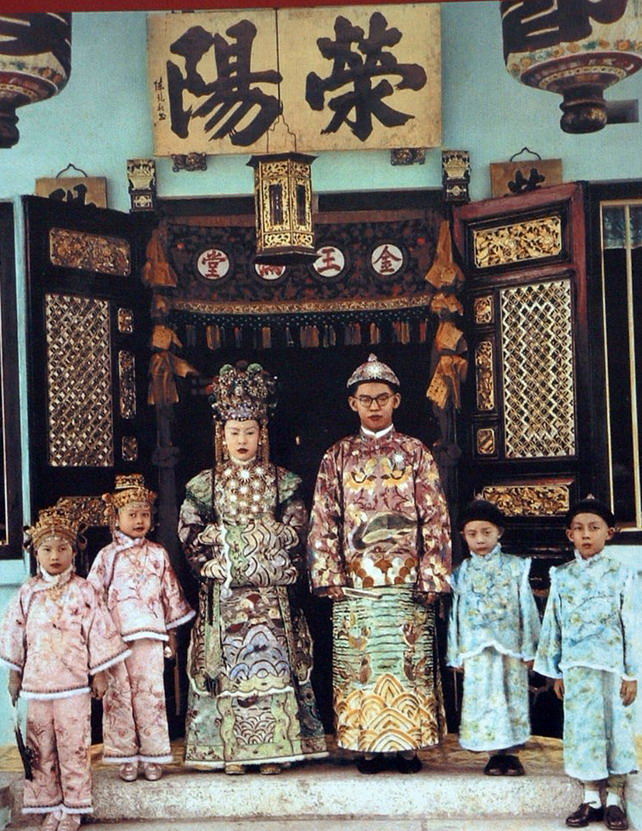
https://en.wikipedia.org/wiki/Peranakans
Looking at these reforms and how it was that China adapted many of things that they saw in the West was something that I found fascinating as in the past chapters that we have read about China closing itself off to the rest of the world.
Additionally, in this week’s reading ‘Who are the Peranakan Chinese? Deep routes and many routes’ it was interesting to see how the Peranakan Chinese embodied this period of change in China as they embraced a multi-cultural identity that challenged the taxonomy that was seemingly present within the Chinese perspective.
Source:
Spence, Jonathan D. The Search for Modern China. Third ed. New York: W.W. Norton & Company, 2013
Choong Wilkins, Rebecca. “Who are the Peranakan Chinese? Deep roots and many routes” LARB China Channel January 24, 2019. https://chinachannel.org/2019/01/24/peranakan/
