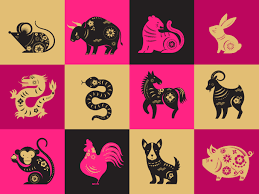
As I continue to try and narrow the scope of my first research project, I stumbled upon an old Chinese myth that I was told as a child. It was that of the zodiac race held by the Jade Emperor. As a kid I didn’t grasp the reason behind the myth and that it was a race that was done to help create a system for organizing time. Reading over this story again I couldn’t help but to draw some similarities between it and the zodiac signs that many people refer to in Western society today. After deciding to let the zodiac race be my spring broad into defining my first research project I continued to read into the myth and how it is that these zodiac animals have, if at all, had an impact in society.
To my surprise when I went to look up the myth and the larger implications it might have in today’s society there was quite a lot of articles and research papers that were based around this topic. These papers ranged from how in the year of the Dragon the ratio of males to females that were born was skewed towards male’s birth rates, to how the year a child is born in had affected the early-investments parents put aside for that child. Although I was quite confused by articles claiming such correlations existed at first I continued to read about how the zodiac calendar impacts Chinese society and thinking.
One of the more interesting things that I read was an article by Julia Fawal which discussed the lasting implications this calendar has had in Chinese society. One of the impacts that she discussed was how for some families the calendar still plays a role in their family planning. She addresses this in her saying “the Chinese believe certain animals get on better than others. So, parents choose specific years to give birth to babies, because they believe the team effort by the right combination of animals can give prosperity to families.” To someone like me being influenced in something so monumental as having a child on a myth about the calendar year is a very foreign concept. The article then went further to address that these family-to-family decisions “might seem small, but it causes an actual fluctuation in consumer demand and impacts economy.” Looking at this article as a business major and someone that is very interested in the psychology behind consumer behavior, I think that this theme of mythology having a correlation to societal behavior is going to be something that I want to continue investigating as I narrow my research project down.
As I continue my investigation and reading the terms that I had success with so far are:
- Myth implications on consumer behavior
- Chinese Zodiac
- Chinese Myths
- Correlation
Moving forward I believe that I am going to keep a more traditional essay base for my research project as I am most comfortable with it as a tool of analysis and deconstruction.
Bibliography
- Chinese zodiac: Cultural significance. Chinese Zodiac | Cultural Significance. (n.d.). Retrieved September 20, 2021, from https://depts.washington.edu/triolive/quest/2007/TTQ07030/culture.html.
- Infoplease. (n.d.). The Chinese zodiac. Infoplease. Retrieved September 20, 2021, from https://www.infoplease.com/culture-entertainment/mythology-folklore/chinese-zodiac.
- Fawal, J., About the authorJulia Fawal is the Social Content Manager at TED., & Beard, J. C. (2016, September 20). The surprising influence of the Chinese zodiac. ideas.ted.com. Retrieved September 20, 2021, from https://ideas.ted.com/the-surprising-influence-of-the-chinese-zodiac/.
- Chinese zodiac lucky and bad years: What are your lucky and unlucky years? Your Chinese Astrology. (n.d.). Retrieved September 20, 2021, from https://www.yourchineseastrology.com/zodiac/lucky-and-unlucky-years.htm.
