This week I chose to do my blog post on exploration pack 1. Exploration pack 1 included the reading of chapter 11 and 12 from the textbook. In these two chapters we read about the continued effort by the Chinese to reform and explore the Western World; bringing back technology, knowledge of governing structures, new educational systems, and much more. In addition to this progress in China these two chapters discussed the internal turmoil that was present during this time. This increasing level of turbulence with China during a period of such great advancements was something that I found particularly interesting.
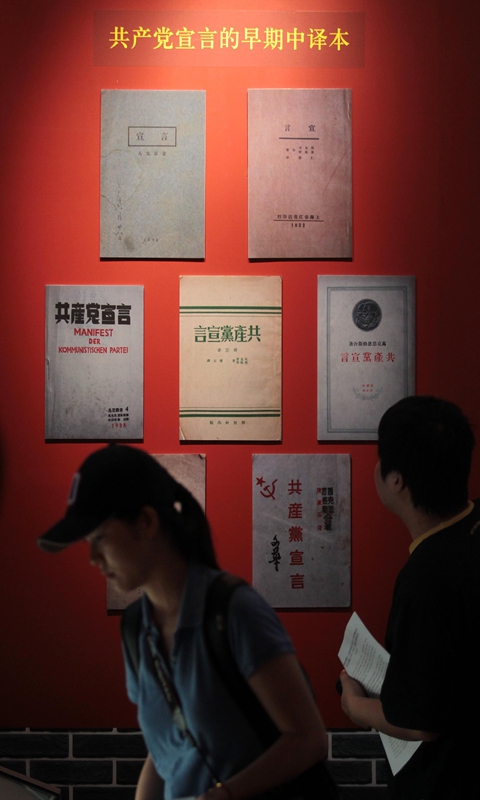
https://www.globaltimes.cn/content/1195667.shtml
This unrest caught my attention because in a time of such change in China I would have assumed that all those opposing such transformations would be suffering from inertia and instead of wanting to put in place new systems of government and adopt new ideologies would have wanted to revert back to those traditional practices that China had been able to conserve. Instead, however reading Chapter 11 and 12 we begin to see the appearance of communism, socialism and democratic ideologies. For me this seemed almost ironic that the forces that were trying to overthrow the Qing and change the way in which China was interacting with foreign powers were adopting different Western ideals as a way to rationalize their overthrowing of traditional Chinese governance. Now obviously there were many more factors that contributed to the expanding want in China to overthrow the Qing and to start a new system of governance in China, such as the corruption that was present at the time as well as various other things. Me commenting on the irony is however is nothing more than personal speculation on what the events of the time meant looking back in retrospect.
Finally, one of the other interesting components of this chapter that I quite enjoyed reading about (as I previously had no knowledge of it) was how after China’s push to have fair/democratic elections they fell back into a time of warlords. It is was these warlords and their fighting for territory and the loyalty of groups of people that reminded me of what we have read previously about barbican uprisings that were present at the start of the Qing era.
Sources:
Spence, Jonathan D. The Search for Modern China. Third ed. New York: W.W. Norton & Company, 2013.
- Chapters 11 and 12 and 13 (“The New Republic”)
