This week’s basic set covered the increasing tensions between Japan and China, including the conflict between the two leading up to World War II, as well as the unraveling of the Guomindang. Reading through this basic set I found it to be one of the most action-packed set of readings we have had a look at thus far.
One of the more disturbing parts of reading chapter 17 in particular was learning about the Rape of Nanjing. It was in reading this that I was shocked that the Japanese could allow their soldiers to allow such actions. Although there was on both sides building nationalistic sentiments played a large role in the continued conflicts between the two countries, the aggression present in the acts of the Japanese in Nanjing falls short of nothing but disgusting. One of the more disturbing quotes from the chapter to me was that “The number of women who were raped, many of whom died after repeated assaults, were estimated by foreign observers living at Nanjing at 20,000…” After hearing about these numbers, I can only hope that there were enormous punishments for these soldiers and those that oversaw and allowed such actions to be committed.
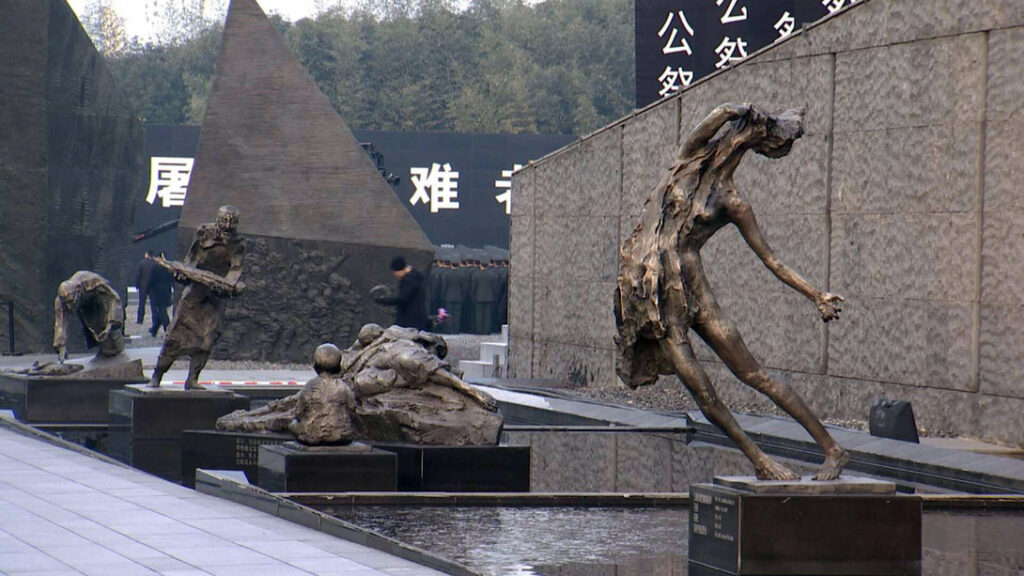
Picture of memorial for the Nanjing Massacre (Rape)
https://wsimag.com/architecture-and-design/48485-remembering-the-nanjing-massacre
As I continued reading another part of Japan’s attack on China that alarmed me was that at the point in time that this occurred war had not been declared and other than increasing tension between the two countries there was little aim behind such conflicts. This then aimlessness of the Japanese forces then obviously progressed into a want for China’s natural resources to support their own industrial growth. But again, the fact that initially such action was taken and allowed whilst there was no concrete objective for the Japanese is absurd.
Looking now at chapter 18 it was interesting to read this week about the failing of the Guomindang which was paralleled with the increasing popularity of the Chinese Communist Party. This flip in power and popularity seemed to me quite quick as it was only 20 or so years earlier that the Guomindang had a strong grip on China. This 20 year turn around compared to the centuries that the Qing dynasty lasted illustrated the weaknesses of the Guomindang.
Sources:
Spence, Jonathan D. The Search for Modern China. Third ed. New York: W.W. Norton & Company, 2013.
- Chapters 17 & 18
